
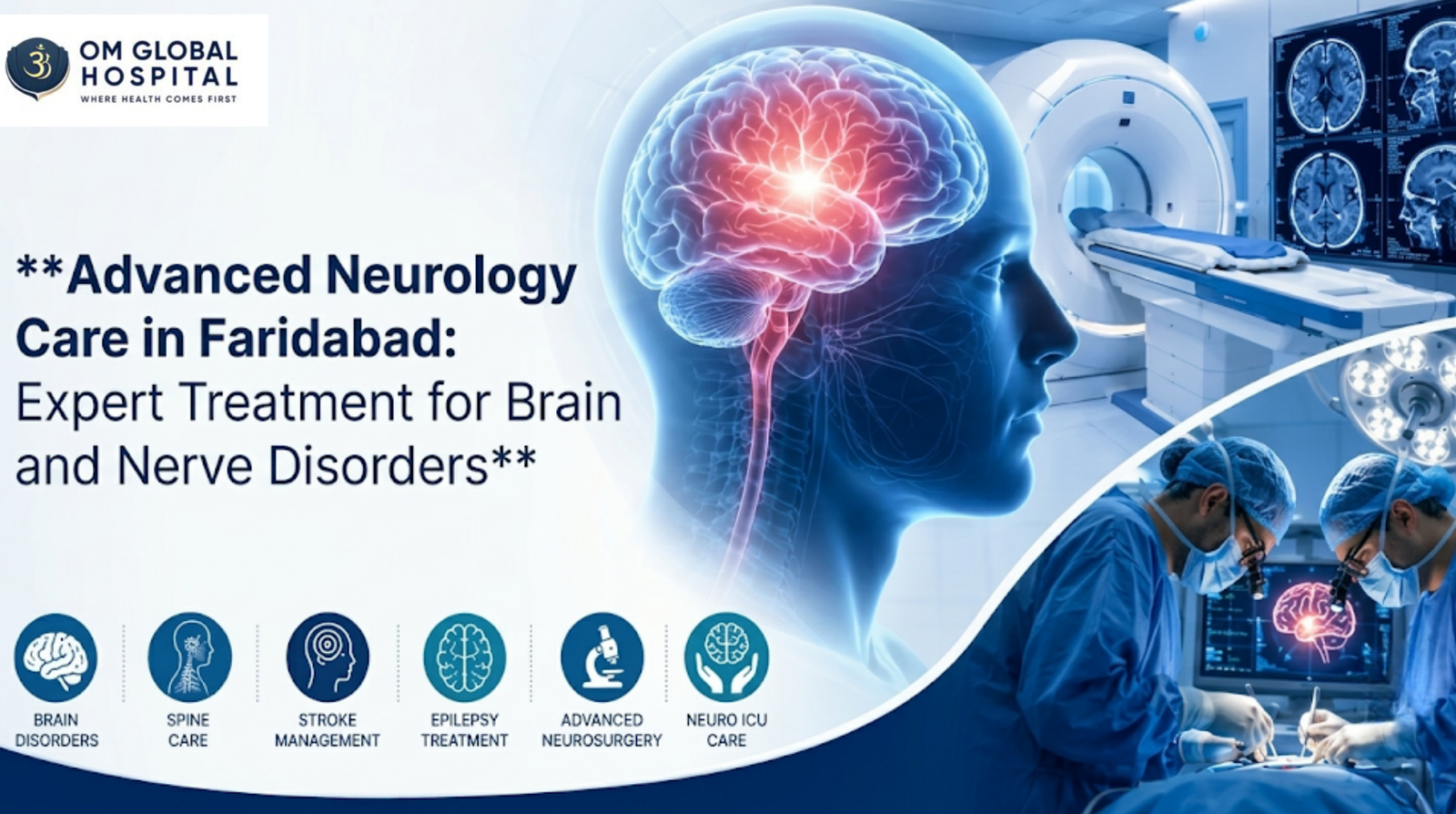
Have you been experiencing frequent headaches, unexplained dizziness, numbness in your hands or feet, or difficulty maintaining balance? While these symptoms may seem minor initially, they can sometimes indicate an underlying neurological condition that requires medical attention.
Neurological disorders affect the brain, spinal cord, and nerves, which together control essential body functions such as movement, speech, memory, coordination, and sensation. When this communication network is affected, even routine daily activities can become challenging.
The good news is that many neurological conditions can be effectively managed with timely diagnosis, appropriate treatment, and regular medical guidance.
If you are looking for advanced neurology care in Faridabad, OM Global Hospital offers multispeciality healthcare services where patients can seek medical consultation and evaluation for various health concerns.
What Is Neurology and Why Is It Important?
Neurology is a specialised branch of medicine that focuses on diagnosing and treating disorders affecting the nervous system, including the brain, spinal cord, and peripheral nerves.
Think of the nervous system as your body’s communication network. The brain acts as the control centre, the spinal cord carries messages, and the nerves transmit instructions to different parts of the body.
When this system is affected, a person may experience problems related to movement, memory, sensation, coordination, or behaviour.
Common Neurological Conditions
Neurology covers a wide range of conditions, including:
- Stroke: Occurs when blood supply to a part of the brain is interrupted or when a blood vessel in the brain ruptures.
- Epilepsy: A neurological condition characterised by a tendency to experience recurrent seizures.
- Migraine: A neurological condition that can cause recurring headaches, nausea, and sensitivity to light or sound.
- Peripheral Neuropathy: Nerve damage that may cause tingling, burning sensations, numbness, or weakness.
- Parkinson’s Disease: A progressive neurological condition that affects movement, balance, and coordination.
- Memory Disorders: Conditions that affect memory, thinking, and other cognitive abilities.
- Nerve Compression: Pressure on nerves that can lead to pain, weakness, tingling, or altered sensation.
Recognising these conditions early can help patients receive appropriate medical evaluation and treatment.
Common Signs That You Should Consult a Neurologist
Neurological symptoms can develop gradually or appear suddenly. Some people experience mild discomfort, while others notice changes that interfere with their everyday activities.
Understanding these warning signs can help you seek medical attention at the right time.
1. Frequent or Severe Headaches
Occasional headaches are common. However, recurring headaches, especially when accompanied by vomiting, visual disturbances, or unusual neurological symptoms, should not be ignored. Migraines and other neurological conditions may require proper evaluation and treatment.
2. Numbness or Tingling in Hands and Feet
Do you frequently experience a pins-and-needles sensation in your fingers, hands, or feet? Persistent tingling, burning, or numbness may indicate nerve-related problems, including peripheral neuropathy. Diabetes, vitamin deficiencies, and other medical conditions can contribute to nerve damage.
3. Dizziness and Balance Problems
Feeling unsteady while walking, experiencing repeated dizziness, or having difficulty coordinating movements may indicate an underlying health concern. A proper medical assessment can help determine whether the problem involves the nervous system or another medical condition.
4. Seizures or Unusual Body Movements
Seizures may involve involuntary movements, loss of awareness, unusual sensations, or changes in behaviour. Even if someone recovers quickly after an episode, medical evaluation is important to identify the possible cause.
5. Memory Loss and Difficulty Concentrating
Occasionally forgetting something is normal. However, persistent memory difficulties, confusion, or noticeable changes in thinking should receive medical attention, especially when they begin affecting everyday activities.
Important: Recognise the Warning Signs of Stroke
Sudden facial drooping, weakness on one side of the body, difficulty speaking, sudden vision loss, or loss of balance may indicate a stroke. Seek emergency medical help immediately. Do not wait for an appointment or assume the symptoms will disappear.
Why Is Early Diagnosis Important for Neurological Disorders?
Neurological conditions do not always produce noticeable symptoms in their early stages. Sometimes, changes develop gradually, making them easy to overlook.
Early diagnosis helps doctors understand the underlying cause, assess the severity of the condition, and recommend an appropriate treatment plan.
For example, persistent numbness may be associated with diabetes-related nerve damage, vitamin B12 deficiency, or another neurological condition. Identifying and treating the underlying cause is often more effective than simply trying to suppress the discomfort.
According to the World Health Organization, approximately 1 in 4 adults is expected to experience a stroke during their lifetime. This highlights the importance of recognising warning signs and addressing risk factors.
Early medical attention may help:
- Identify neurological disorders before symptoms become more severe.
- Reduce the risk of complications in certain conditions.
- Improve symptom management and everyday functioning.
- Support long-term management of chronic neurological conditions.
- Help patients and their families understand available treatment options.
How Are Neurological Disorders Diagnosed?
There is no single test that can diagnose every neurological disorder. The evaluation depends on the patient’s symptoms, medical history, and clinical examination.
Depending on the suspected condition, a neurologist may recommend different investigations to understand how the nervous system is functioning.
1. Neurological Examination
A neurological examination helps evaluate muscle strength, reflexes, coordination, balance, sensation, vision, and speech. It allows the doctor to identify possible abnormalities in nervous system function.
2. MRI Scan
Magnetic Resonance Imaging (MRI) uses magnetic fields and radio waves to produce detailed images of the brain and spinal cord. It can help identify abnormalities, tumours, inflammation, and other neurological problems.
3. CT Scan
A Computed Tomography (CT) scan uses X-rays to create detailed images of the brain. It is particularly important in emergency situations, including suspected stroke and head injuries.
4. EEG Test
An Electroencephalogram (EEG) records the electrical activity of the brain. It is commonly used when evaluating seizures and epilepsy.
5. Blood Tests
Blood investigations may help identify conditions such as diabetes, vitamin deficiencies, thyroid disorders, and other metabolic problems that can contribute to neurological symptoms.
Not every patient requires all these tests. The doctor recommends investigations based on individual symptoms and medical requirements.
Advanced Neurology Treatment Options in Faridabad
Neurological treatment depends on the underlying condition, its severity, and the patient’s overall health. The primary goal is to address the cause wherever possible, manage symptoms, prevent complications, and help patients maintain a good quality of life.
Some commonly used treatment approaches include:
Medication Management
Appropriate medicines may help manage migraines, epilepsy, nerve pain, movement disorders, and other neurological conditions. The type and dosage of medication depend on the patient’s diagnosis and medical needs.
Stroke Management
Stroke treatment depends on the type of stroke and how quickly the patient receives medical attention. Emergency treatment may involve specialised interventions to restore blood flow or manage bleeding, depending on the situation.
Epilepsy Management
Antiseizure medications and regular medical monitoring can help many patients achieve better seizure control. Treatment plans are adjusted according to the type of seizures and the patient’s response to medication.
Neuropathy Treatment
Treatment for neuropathy focuses on identifying and addressing its underlying cause. This may involve managing diabetes, correcting nutritional deficiencies, and using appropriate medicines to manage nerve-related symptoms.
Rehabilitation and Therapy
Physiotherapy, occupational therapy, and speech therapy may support recovery and improve daily functioning in selected patients, particularly after neurological injuries or stroke.
Long-Term Monitoring
Regular follow-up appointments help doctors evaluate treatment effectiveness, monitor symptoms, and make necessary adjustments to the treatment plan.
Every neurological condition requires an individualised approach. Self-medication or stopping prescribed medicines without medical advice can create additional health risks.
Why Choose OM Global Hospital for Neurology Care in Faridabad?
When dealing with a neurological condition, choosing the right healthcare facility is an important decision. Patients and their families often need clear explanations, timely medical attention, and guidance throughout their treatment journey.
OM Global Hospital, a multispeciality hospital in Faridabad, provides a healthcare setting where patients can seek consultation and evaluation for various medical concerns.
Some important considerations when choosing neurological care include:
- Patient-Focused Approach: Understanding the patient’s symptoms, medical history, and individual concerns.
- Clinical Evaluation: Identifying possible causes through appropriate medical assessments and investigations.
- Treatment Guidance: Helping patients understand available treatment options and follow-up requirements.
- Multispeciality Healthcare: Access to different medical specialities when a patient’s condition requires coordinated care.
- Ongoing Support: Providing guidance for patients managing long-term health conditions.
The right treatment journey begins with understanding the problem and seeking medical advice at the appropriate time.
What Does Your Neurology Treatment Journey Look Like?
Understanding the treatment process can make your first hospital visit less stressful. Although every patient’s journey is different, neurological evaluation and treatment generally involve the following stages.
Step 1: Initial Consultation
The doctor discusses your symptoms, medical history, lifestyle, and health concerns to understand your condition.
Step 2: Clinical Examination
A neurological examination is performed to assess muscle strength, reflexes, coordination, balance, sensation, and other nervous system functions.
Step 3: Diagnostic Investigations
Relevant tests, such as MRI, CT scans, EEG, or blood investigations, may be recommended if required.
Step 4: Diagnosis
The doctor evaluates the examination findings and investigation reports to identify the possible underlying cause.
Step 5: Treatment Planning
An appropriate treatment and management plan is discussed according to the diagnosis, symptoms, and overall health of the patient.
Step 6: Follow-Up and Monitoring
Regular follow-up appointments help track progress, monitor treatment response, and make adjustments whenever necessary.
The treatment timeline varies depending on the neurological condition and its severity. If you suspect a stroke or another neurological emergency, seek immediate medical attention instead of waiting for a routine appointment.
Frequently Asked Questions About Neurology Care in Faridabad
1. When should I consult a neurologist?
You should consider consulting a neurologist if you experience frequent headaches, repeated dizziness, numbness or tingling, unexplained weakness, seizures, or persistent memory problems. Sudden neurological symptoms, particularly those suggesting a stroke, require emergency medical care.
2. What are the most common neurological disorders?
Some common neurological disorders include migraine, epilepsy, stroke, Parkinson’s disease, peripheral neuropathy, nerve compression, and certain memory disorders. Each condition has different symptoms and requires an appropriate treatment approach.
3. Can neurological disorders be treated completely?
Some neurological conditions can be treated effectively, while others may require long-term management. Treatment outcomes depend on the underlying cause, severity of the condition, and the patient’s response to medical care.
4. Which tests are required to diagnose neurological problems?
The tests depend on your symptoms and clinical examination. A doctor may recommend an MRI, CT scan, EEG, blood investigations, or nerve conduction studies when required.
5. Is numbness in the hands and feet a neurological problem?
Numbness in the hands and feet may be related to nerve damage, diabetes, vitamin deficiencies, nerve compression, or other health conditions. A medical evaluation can help identify the underlying cause.
6. Can neurological conditions affect daily activities?
Yes. Depending on the condition, neurological disorders may affect walking, speaking, memory, coordination, sensation, and muscle control. Timely diagnosis and appropriate treatment can help manage symptoms and support daily functioning.
Consult OM Global Hospital for Neurology Care in Faridabad
Your brain and nervous system play an essential role in almost everything you do, from walking and speaking to thinking and remembering. Persistent headaches, unexplained dizziness, numbness, seizures, or balance difficulties should not be ignored.
Seeking timely medical advice can help identify the underlying cause and guide you towards appropriate treatment.
If you or someone in your family is experiencing neurological symptoms, contact OM Global Hospital to enquire about a consultation and available specialist services.
Hospital Name: OM Global Hospital – Multispeciality Hospital, Faridabad
Address: Plot No. 400, HUDA Market, Sector 7B, Sector 7, Faridabad, Haryana – 121006.
Contact Number: 096679 31822