Stay Safe and Healthy During Pregnancy This Summer
Pregnancy is a beautiful journey, but the summer season can bring unique challenges for expecting mothers. High temperatures, dehydration, heat exhaustion, and food-borne illnesses can affect both the mother and the growing baby. Taking the right precautions during summer can help ensure a healthy and comfortable pregnancy.
At Om Global Hospital, our experienced gynecologists emphasize the importance of proper hydration, nutrition, and sun protection to keep mothers and babies safe throughout the summer months.
Why Summer Can Be Challenging During Pregnancy
During pregnancy, a woman’s body naturally produces more heat due to hormonal changes and increased blood circulation. Combined with hot weather, this can increase the risk of:
- Dehydration
- Heat exhaustion
- Dizziness and fatigue
- Swelling in the hands and feet
- Low blood pressure
- Food poisoning
- Urinary tract infections (UTIs)
Proper summer care can significantly reduce these risks and support a healthy pregnancy.
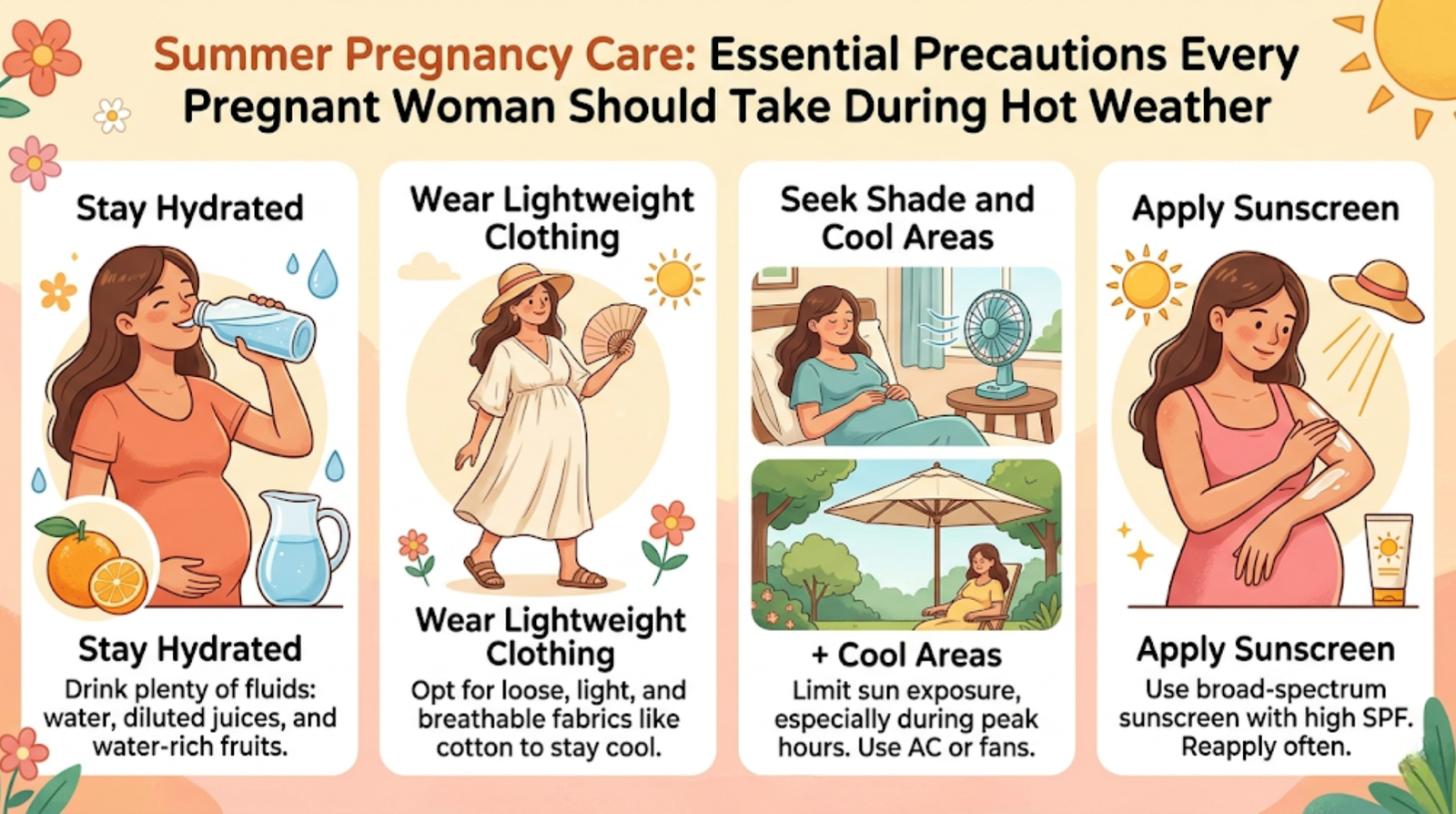
1. Stay Hydrated Throughout the Day
Hydration is one of the most important aspects of summer pregnancy care.
Pregnant women need additional fluids to support increased blood volume, amniotic fluid production, and their baby’s development.
What to Drink:
- Water
- Coconut water
- Lemon water
- Buttermilk
- Fresh fruit juices
- Homemade electrolyte drinks
Benefits of Staying Hydrated:
- Prevents dehydration
- Reduces headaches and dizziness
- Supports fetal development
- Helps regulate body temperature
- Prevents constipation
Expert Tip: Carry a water bottle wherever you go and aim to drink fluids regularly, even if you don’t feel thirsty.
2. Eat Fresh Seasonal Fruits
Fresh fruits provide essential vitamins, minerals, fiber, and water content that help maintain energy levels during pregnancy.
Best Summer Fruits for Pregnancy:
- Watermelon
- Muskmelon
- Mangoes (in moderation)
- Oranges
- Pomegranates
- Apples
- Pears
Important Precaution:
Always eat freshly cut fruits. Avoid fruits that have been left uncovered or stored for long periods, as they may harbor harmful bacteria.
3. Avoid Outside Food and Street Food
Food contamination increases during summer due to high temperatures.
Pregnant women are more vulnerable to infections that can lead to:
- Food poisoning
- Diarrhea
- Vomiting
- Typhoid
- Cholera
- Dehydration
Safer Choices:
- Freshly cooked homemade meals
- Properly washed vegetables
- Hygienically prepared foods
Avoid stale, refrigerated foods that have been stored for extended periods.
4. Wear Comfortable and Breathable Clothing
Choosing the right clothing can make a significant difference during hot weather.
Recommended Fabrics:
- Cotton
- Linen
- Lightweight breathable materials
Benefits:
- Keeps the body cool
- Absorbs sweat
- Prevents skin irritation
- Reduces heat discomfort
Loose-fitting clothes also improve circulation and overall comfort.
5. Avoid Direct Sun Exposure
The strongest sunlight typically occurs between 11:00 AM and 4:00 PM.
During this period, prolonged exposure can increase the risk of:
- Heat exhaustion
- Dehydration
- Sunburn
- Fatigue
Summer Safety Tips:
- Stay indoors whenever possible
- Use an umbrella when outdoors
- Wear a wide-brimmed hat
- Apply pregnancy-safe sunscreen
- Seek shade frequently
6. Watch for Signs of Heat Exhaustion
Heat-related illnesses can develop quickly during pregnancy.
Warning Signs Include:
- Excessive sweating
- Dizziness
- Headache
- Rapid heartbeat
- Weakness
- Nausea
- Fainting
If you experience these symptoms, move to a cool place immediately, hydrate, and contact your healthcare provider.
7. Maintain a Healthy Pregnancy Diet
A balanced diet helps your body cope better with heat and supports your baby’s growth.
Include:
- Fresh fruits and vegetables
- Whole grains
- Protein-rich foods
- Dairy products
- Healthy fats
Limit:
- Excessively spicy foods
- Sugary beverages
- Processed foods
- Excess caffeine
8. Get Adequate Rest
Summer heat can increase fatigue during pregnancy.
Ways to Stay Comfortable:
- Sleep in a cool, well-ventilated room
- Use light bedding
- Elevate your feet to reduce swelling
- Take short rest breaks throughout the day
Adequate sleep helps maintain healthy blood pressure and supports fetal development.
When Should You Contact Your Doctor?
Seek immediate medical attention if you experience:
- Persistent dizziness
- Severe dehydration
- Reduced fetal movements
- High fever
- Continuous vomiting
- Severe swelling
- Signs of heat exhaustion
Early medical intervention can prevent complications and ensure maternal and fetal well-being.
Frequently Asked Questions (FAQs)
Is summer heat dangerous during pregnancy?
Extreme heat can increase the risk of dehydration, heat exhaustion, and pregnancy-related complications. Proper hydration and sun protection can significantly reduce these risks.
How much water should a pregnant woman drink during summer?
Most pregnant women should consume at least 8–12 glasses of fluids daily, though individual needs may vary based on weather and activity levels.
Can pregnant women drink coconut water every day?
Yes. Coconut water is generally considered a healthy hydration option during pregnancy and provides natural electrolytes.
Which fruits are best during summer pregnancy?
Watermelon, muskmelon, oranges, pomegranates, apples, and pears are excellent choices due to their high water and nutrient content.
Is it safe to go outside during hot weather while pregnant?
Yes, but avoid peak sunlight hours between 11 AM and 4 PM whenever possible and use proper sun protection.
What are the symptoms of dehydration during pregnancy?
Common symptoms include dry mouth, dizziness, dark urine, fatigue, headaches, and reduced urination.
Conclusion
Summer pregnancy requires extra care, but simple precautions can make a significant difference. Staying hydrated, eating fresh foods, wearing breathable clothing, avoiding direct sun exposure, and recognizing warning signs early can help protect both mother and baby.
Every pregnancy is unique, and personalized medical guidance is essential. If you have any concerns during pregnancy, consult your gynecologist promptly.
Book Your Pregnancy Consultation Today
At Om Global Hospital, our experienced obstetricians and gynecologists provide comprehensive prenatal care to help you enjoy a safe and healthy pregnancy throughout every season.
📞 Call us today to schedule your pregnancy check-up.
🌐 Visit our website to learn more about our maternity and women’s healthcare services.
Your health and your baby’s well-being are our highest priorities.